
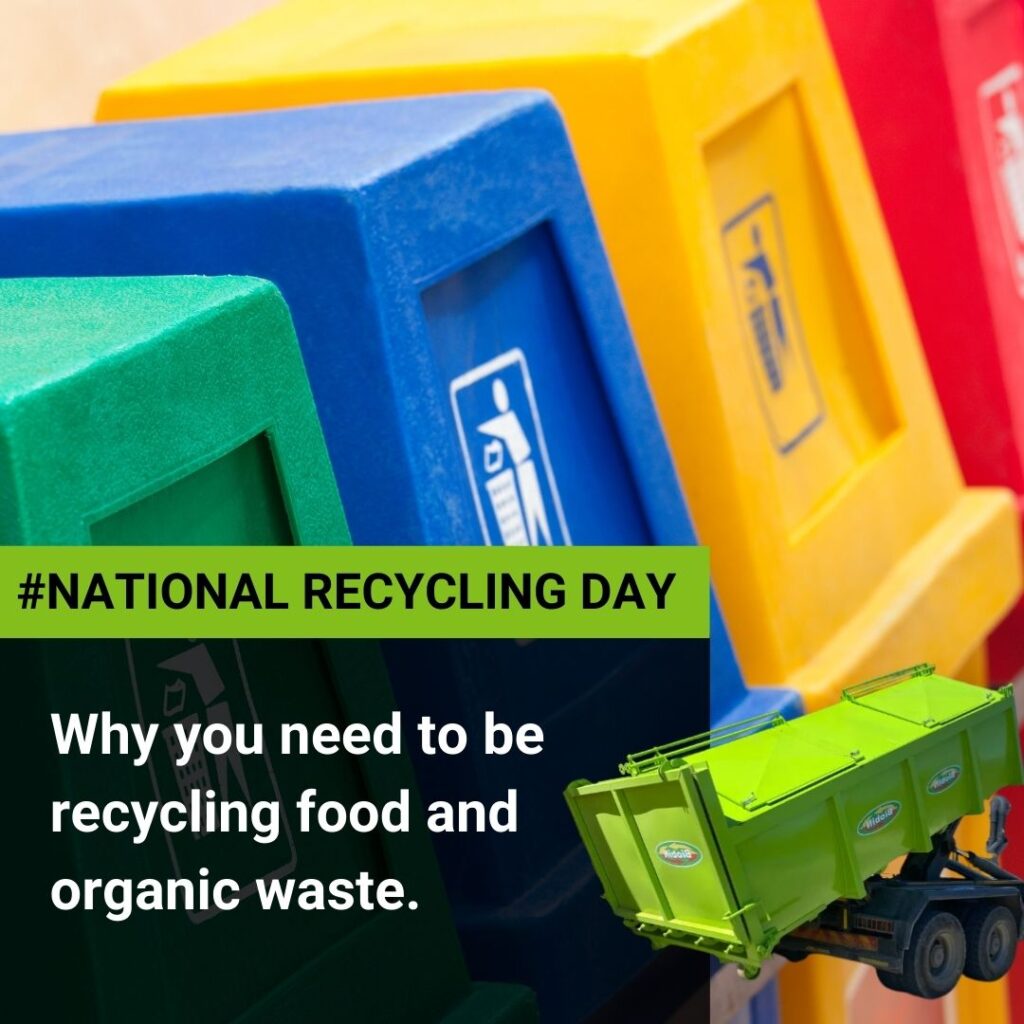
South Africa celebrates National Recycling Day on 21 September each year. The day is an important opportunity to reflect on how the country manages its waste and how ordinary people, communities, and businesses can contribute to more sustainable waste practices. Recycling is commonly associated with materials such as paper, glass, metal, and plastics. However, it is important to understand that recycling extends to our food and organic waste – not only solid waste materials. Organic waste forms a very large portion of South Africa’s total waste generation (10 million tonnes/year), and the way it is managed has far-reaching consequences for the environment as well as the economy.
Why do we need to recycle organic waste
When organic waste is disposed of in landfill sites, it places additional strain on sites that are already nearing capacity. To put this into perspective, organic waste can make up close to 40% of landfill waste in South Africa. Diverting such a significant proportion away from landfill would ease landfill pressure and create opportunities to repurpose waste as a resource. Composting and related waste beneficiation processes can produce incredibly valuable soil enhancement products – something that is needed in an agriculturally reliant economy.
Community-based opportunities in the recycling economy
Small-scale composting initiatives, for example, can provide affordable soil enhancers for emerging farmers while also creating jobs in the collection, sorting, and treatment of waste. Restaurants, hotels, and retailers can partner with service providers that specialise in diverting organic waste into composting or animal feed. These arrangements generate new business opportunities and keep resources circulating within communities.
Encouraging public participation
National Recycling Day plays a role in creating awareness about these issues and mobilising participation. The day is also an opportunity to recognise the people who contribute to the recycling economy in South Africa in ways that are often overlooked. Informal waste pickers, for example, have long been a critical part of the recycling chain. Their work reduces significant volumes of waste going to landfill, yet they are frequently unrecognised. National Recycling Day offers a platform to acknowledge their contribution and to think more about how we can all start recycling our waste – including your food waste.
Practical actions that support recycling efforts
To play your part on National Recycling Day, there are a few easy and impactful initiatives you can take on:
- Attend a local community clean-up, whether it be at your local beach, parks or in a city centre.
- Improve your waste habits at home by separating your waste into solid waste, recyclables, organic waste, and general waste (landfill).
- Support the local businesses that have good waste management practices. This should include both solid waste recycling and composting.
Organic waste deserves particular attention because it is often a waste stream that people view has non-recyclable. Therefore, days like National Recycling Day play an important role in shifting this perception so we can collectively create a circular economy with this incredibly valuable waste stream.
For more information, please visit www.biobin.co.za
END.