
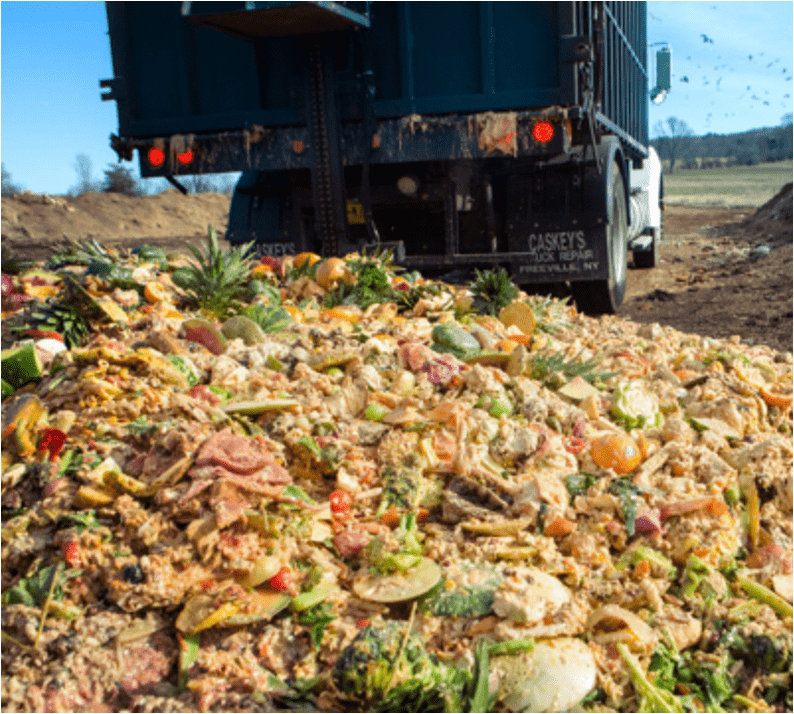
Think about the total scale of food and organic material passing through retail facilities. While food loss and waste should be reduced, there are volumes of food waste that are inevitable, whether due to spoilage, damaged packaging, cold chain failure, or product sell-by dates. Yet, when we see this waste purely as a disposal requirement rather than as part of a value chain, we lose opportunities for recovery and economic value.
Retailers occupy a powerful position in shaping the way food and organic materials move through the economy. In many ways, they function as hubs where products are aggregated, stored, and distributed. Retail distribution centres serve as the ‘logistical backbones’ of a retail chain but can also play a critical role in enabling a circular waste system for food and organic waste.
Establishing organic waste take-back systems within retail distribution centres is one of the most viable solutions to open up a value chain for organic materials. These take-back systems allow retailers to collect organic waste not only from their own operations but also from stores and suppliers connected to their networks. By consolidating organic waste at distribution points, retailers can create more organic waste recovery routes, channelling this material stream towards processes such as composting, anaerobic digestion, or other forms of beneficiation. This is the best way to support the local organic waste circular economy.
Policies and market shifts in favour of organic waste circularity
South Africa is moving towards firmer regulation of waste streams, including the forthcoming landfill restrictions on organic waste. Retailers cannot afford to wait until deadlines arrive. By piloting and implementing take-back systems now, retailers will position themselves ahead of compliance curves. This is already evident with Extended Producer Responsibility (EPR) frameworks that require producers to take responsibility over the full lifecycle of the products they put into circulation. The same should be done with food and organic waste.
At the same time, consumer expectations are evolving. Shoppers are becoming more aware of waste and climate change, and many are questioning the sustainability credentials of the companies they support. Retailers who demonstrate a visible commitment to responsible waste management build trust with consumers, while also assuring investors and stakeholders who are increasingly evaluating environmental, social, and governance (ESG) performance.
Economic and social dimensions
Importantly, building organic waste value chains has direct social and economic implications. When organic materials are diverted from landfill, costs associated with disposal and landfill levies are reduced. At the same time, beneficiation activities such as composting or processing have economic spin-offs, such as creating jobs and opportunities for local enterprises. Small entrepreneurs can participate as transporters, processors or distributors of compost and other by-products. By deliberately designing take-back systems that include local actors, retailers can strengthen the local circular economy.
Time is a critical factor. Landfills in South Africa are under severe pressure, with many municipalities struggling to manage capacity. Organic waste is one of the heaviest contributors to landfill volumes, and it generates methane emissions that accelerate climate change. Every tonne diverted from landfill is a direct contribution to national waste targets.
For retailers, this means that waste management is no longer a back-office concern. It is a core strategic issue that intersects with compliance, sustainability reporting, operational efficiency, and social responsibility. Organic waste take-back systems within distribution centres provide a tangible, scalable, and measurable way of responding to these multiple demands.
By embedding these systems, retailers not only prepare themselves for regulatory shifts but also create meaningful value in the form of compost, energy, and economic participation.
For more information, please visit www.biobin.co.za