
The way the industry manages organic material has significant implications for food security, environmental sustainability, and economic efficiency. Globally, the Food and Agriculture Organization (FAO) estimates that around 1.3 billion tonnes of food is wasted every year, while in South Africa, more than 10 million tonnes of food and organic waste end up in landfill annually. This represents both a major environmental challenge and a missed opportunity to repurpose resources that still hold value. By treating organic waste not as a burden but as a material stream that can be redirected into different uses, it becomes possible to design more circular and adaptable systems.
What should be redistributed?
The first and most important principle is that food suitable for human consumption should not be wasted. Before considering composting or animal feed, surplus edible food that does not meet retail standards but is still fit for human consumption must be channelled to redistribution systems. Many supermarkets, farmers, and hospitality businesses are already working with food banks and social organisations to recover unsold but still edible products. Redistribution reduces hunger, strengthens food security, and ensures that resources invested in production, such as water, energy, and labour, are not lost entirely.
However, redistribution requires infrastructure, logistics, and careful handling. Not all surplus food is safe or practical to recover, and perishables often deteriorate too quickly without proper cold chain management. Therefore, redistribution works best when there are strong partnerships between businesses, non-profits, and municipalities. This ensures that food reaches communities in need quickly and safely, extending its value before it becomes unfit for human consumption.
What should become animal feed?
A second avenue for organic material is its conversion into animal feed. Certain food residues, such as fruit and vegetable trimmings, bakery waste, or spent grains, can provide useful nutrition for livestock. Historically, feeding animals on food scraps was common practice, but with clear guidelines for animal health, this has become standard practice within many food production supply chains.
What should be composted?
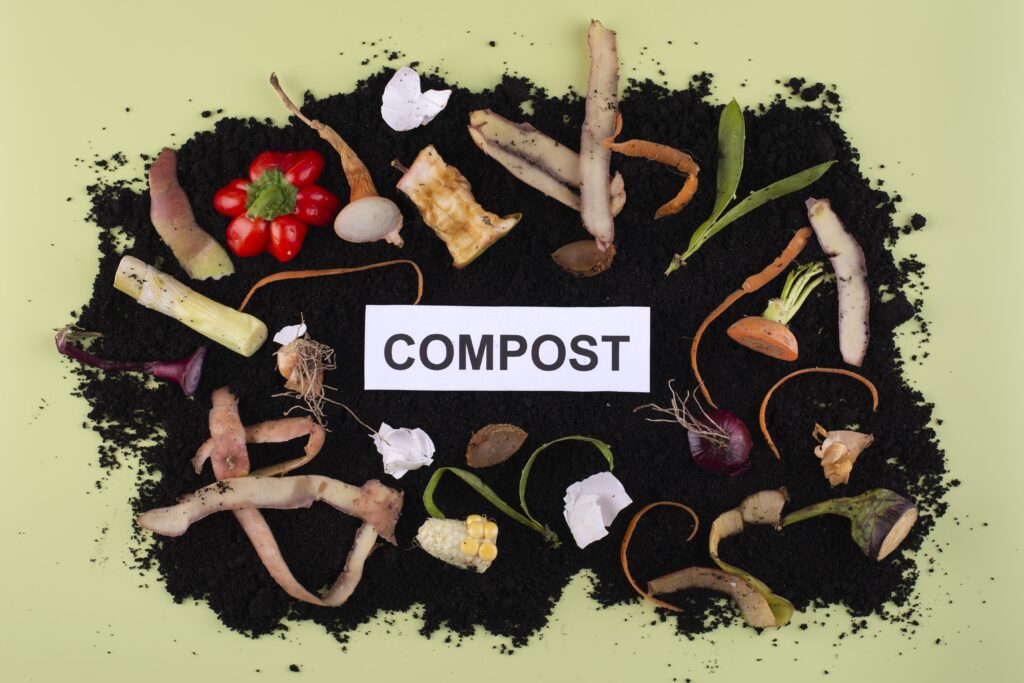
Once food is no longer suitable for redistribution or animal feed, composting becomes the most effective and environmentally appropriate treatment method. Composting is a natural process that transforms organic waste into a nutrient-rich soil amendment product, improving soil structure, water retention, and microbial activity. It diverts organic matter away from landfill, where it would otherwise generate methane, a greenhouse gas with more than 25 times the global warming potential of carbon dioxide.
Crucially, composting is highly adaptable. BiobiN’s on-site composting solutions allow businesses, institutions, and municipalities to process organic waste at its source, ensuring compliance with South Africa’s tightening organic waste regulations, including the ban on organic waste to landfill by 2027. Composting closes the loop in local food systems by returning nutrients to the soil, supporting regenerative agriculture, and reducing reliance on chemical fertilisers whose production is both energy-intensive and environmentally damaging.
Composting also builds resilience, especially in the context of local economies and climate change adaptation. By turning organic waste into compost, communities and businesses create a local supply of soil resource that strengthens agricultural production systems against climate variability and soil degradation. Composting is not just a disposal method; it is a strategy for soil restoration and resource recovery.