
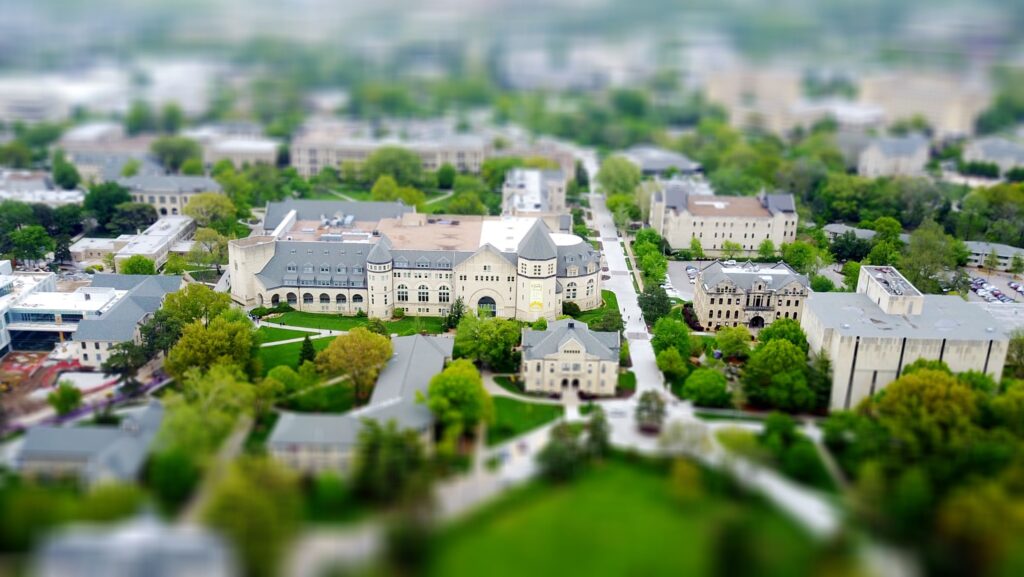
Universities are meant to model the solutions they research. Organic waste is one of the few areas that test this promise more visibly.
Across campuses, dining halls, residences and cafés generate a steady stream of food waste, often representing between 17% and 60% of total solid waste. Globally, food waste is estimated to contribute roughly a third of human-induced greenhouse gas emissions, making it both a sustainability challenge and a measurable opportunity. On-campus composting turns this problem into a working system: a living demonstration of the circular economy in action.
It is increasingly aligning with policy direction. A recent South African social cost–benefit study found that anaerobic digestion and in-vessel composting most directly support the country’s diversion targets under the National Waste Management Strategy. For universities, this positions composting not just as a sustainability initiative, but as a forward-aligned operational choice.
A visible system becomes a visible lesson
Waste systems are usually hidden due to hygiene factors; however, in-vessel composting units like BiobiN are designed for participation, and on a university campus, it demonstrates a very clear waste management model. When organic waste is processed on campus, it becomes part of the institutional landscape, something students and staff can see, question and understand. This visibility turns waste into a teaching tool, reinforcing concepts like resource cycles, emissions reduction and responsible consumption.
At Wits University, Wits Business School, for example, BiobiN processes food waste from residences and canteens, demonstrating the clear potential for organics waste diversion. Since 2024, the campus has diverted more than 2400 Kgs of organic waste from landfill.
The campus as a living laboratory
Universities are uniquely positioned to test and refine sustainability interventions. A 2025 multi-university African study found that student-driven waste initiatives increased diversion rates by around 18% and boosted composting volumes by 35–60%, even where infrastructure was limited.
Composting systems enable this kind of participation. Students can track inputs, analyse outputs and study behavioural responses to waste separation. Faculties from environmental science to engineering, business and public policy can all engage with the system as a research platform. This transforms waste from a facilities issue into an interdisciplinary asset.
From demonstration to alignment
The shift in South Africa’s waste policy landscape is clear: organic waste is moving to the centre of the agenda. Universities, as both knowledge producers and operational entities, are uniquely positioned to lead this transition. On-campus composting demonstrates what circular systems look like in practice. It engages students in measurable ways, generates usable data, and aligns directly with emerging national priorities.
In that sense, composting is not just about waste. It is about credibility, showing that the institutions shaping the future are already living it.