
South Africa presents a striking paradox: it is nationally food-secure, yet many households remain food-insecure. Data from Statistics South Africa consistently show that while food is available nationally, access is uneven, with affordability and local availability limiting what ends up on household plates. At the same time, businesses pay to dispose of tonnes of organic waste, material that is rich in nutrients but treated as a cost rather than a resource.
A composting value chain offers a way to connect these two challenges. Instead of sending organic waste to landfill, businesses can process it on-site into compost and channel it into community food systems. This creates a closed loop: business food waste becomes an input for local food production, strengthening both waste management and social outcomes.
Community gardens: Proven but constrained
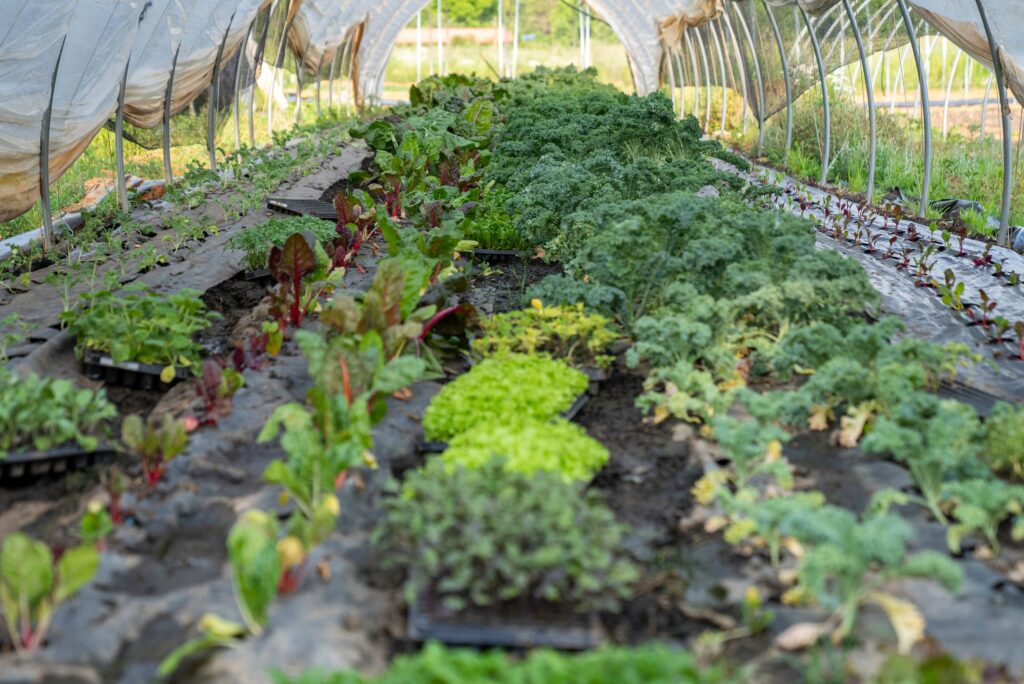
Community food gardens are a proven response to household food insecurity. Across South Africa, many communities rely on small-scale urban agriculture for nutrition and reduced retail food costs. However, these community food gardens are often constrained by poor soil quality, water access and other key resources such of soil amendment products. This is particularly evident on the Cape Flats, where sandy, degraded soils lack the organic matter needed to support consistent crop production.
In townships such as Langa, Khayelitsha and Gugulethu, gardeners frequently start with soil that struggles to retain water or nutrients. Access to compost can significantly improve these conditions, enabling healthier crops and more reliable yields. This is where a composting value chain becomes especially impactful.
Why compost matters for climate resilience
Compost rebuilds soil organic matter, which is fundamental to soil health. Higher organic matter improves soil structure, enhances nutrient availability and increases water-holding capacity. While estimates vary, even small increases in soil organic matter can meaningfully improve water retention, which is an important factor in drought-prone areas like the Northern Cape, where subsistence farming plays a major role in food security.
The value chain is straightforward: business organic waste is separated at source, processed through on-site composting units like BiobiN, and then distributed to community gardens. The climate benefits are also significant. Diverting organic waste from landfill avoids methane emissions; established figures suggest that one tonne of organic waste diverted can prevent roughly 500 kg of CO₂-equivalent emissions, while aerobic composting reduces the waste’s greenhouse gas impact by up to 87–96%.
Policy momentum and practical implementation
Policy developments are reinforcing this shift. South Africa’s draft National Waste Management Strategy (NWMS) 2026 prioritises organic waste diversion and encourages separation at source. As businesses adapt to these requirements, identifying beneficial end uses for organic waste becomes increasingly important. Community food gardens present a natural and locally impactful destination.
On-site composting systems, such as those provided by BiobiN, enable this model by offering clean, odour-free processing with measurable outputs. Volumes of waste processed can be tracked, translated into tonnes diverted, and linked to compost produced and distributed. This makes it possible for businesses to run credible, data-backed community programmes.
From waste to community value chain
The opportunity is clear: organic waste should be viewed not as an endpoint cost, but as the starting point of a community value chain. By investing in on-site composting and directing compost to local food gardens, businesses can help build healthier soils, stronger communities, and greater climate resilience.
Image: Mark Stebnicki