
Eco-estates are built on the promise of a better way to live, closer to nature, more conscious of our impact, and designed with sustainability in mind. But even in these greener, more intentional spaces, one challenge will always need attention: what to do with all the food and organic waste we generate. For an eco-estate to offer an authentic sustainable living situation, organic waste should not be collected and sent to landfill – it should be repurposed.
You can have solar panels on every roof and indigenous gardens in every yard, but if leftover food, lawn clippings, and kitchen scraps are being towed off to landfill, something isn’t adding up.
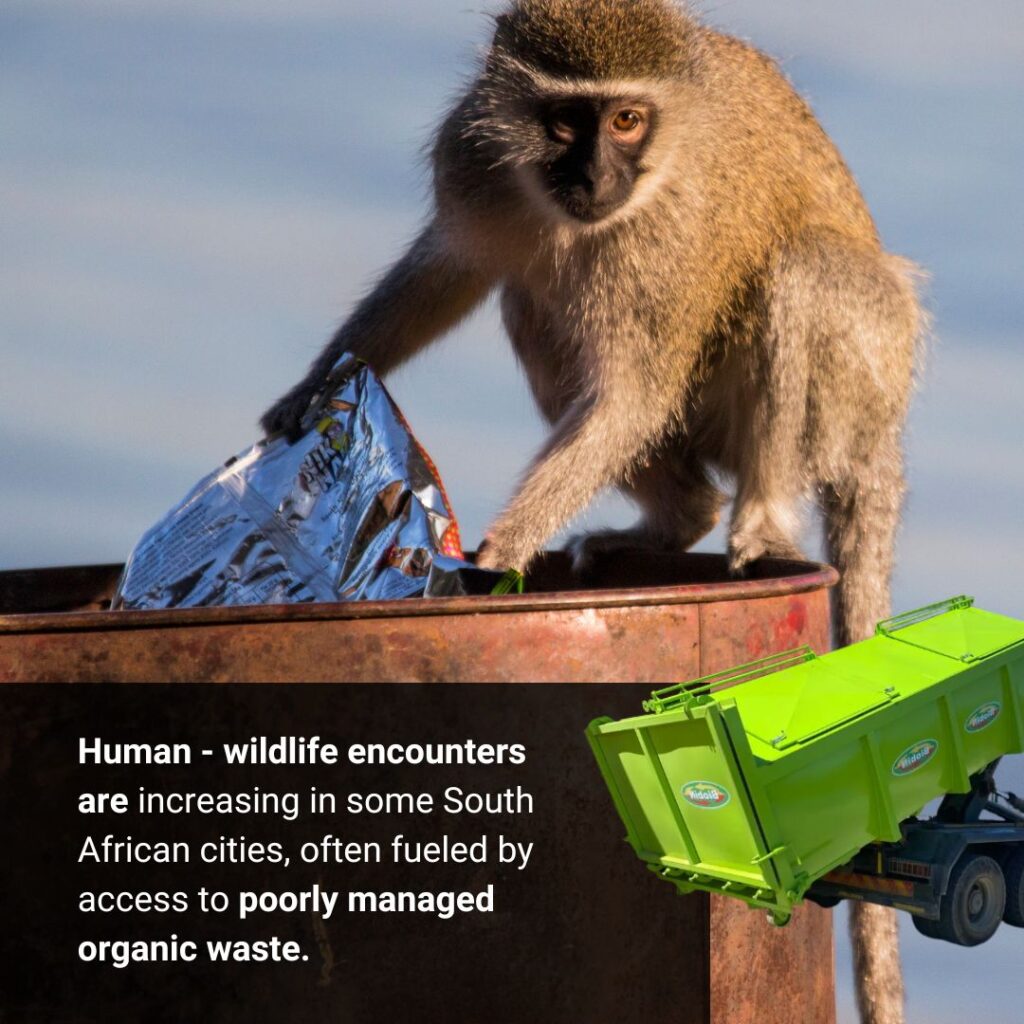
For eco-estates located near reserves or wildlife corridors, food waste can also invite human-wildlife conflict. Left uncovered, it can attract baboons, monkeys or rodents, disrupting both the estate and the animals themselves. We have seen cases like this in many parts of Durban and Cape Town.
What a sustainable organic waste solution looks like
The good news is that there are proven, practical ways to manage food and organic waste without sending it to landfill. In fact, these solutions can actually add immense value to the estate.
Composting is one of the simplest and most effective ways to handle organic waste. Whether done at household level or via a shared estate facility, composting turns kitchen scraps and garden cuttings into nutrient-rich compost that can be a valuable resource for the estate. That compost can then go straight back into maintaining shared green spaces, estate food gardens or individual homes.
A truly forward-thinking eco-estate sees waste as part of a larger system. Communities that embrace shared composting systems also tend to become more aware of their consumption habits. They waste less, grow more, and can even lower their waste collection levies with less municipal waste collected.