
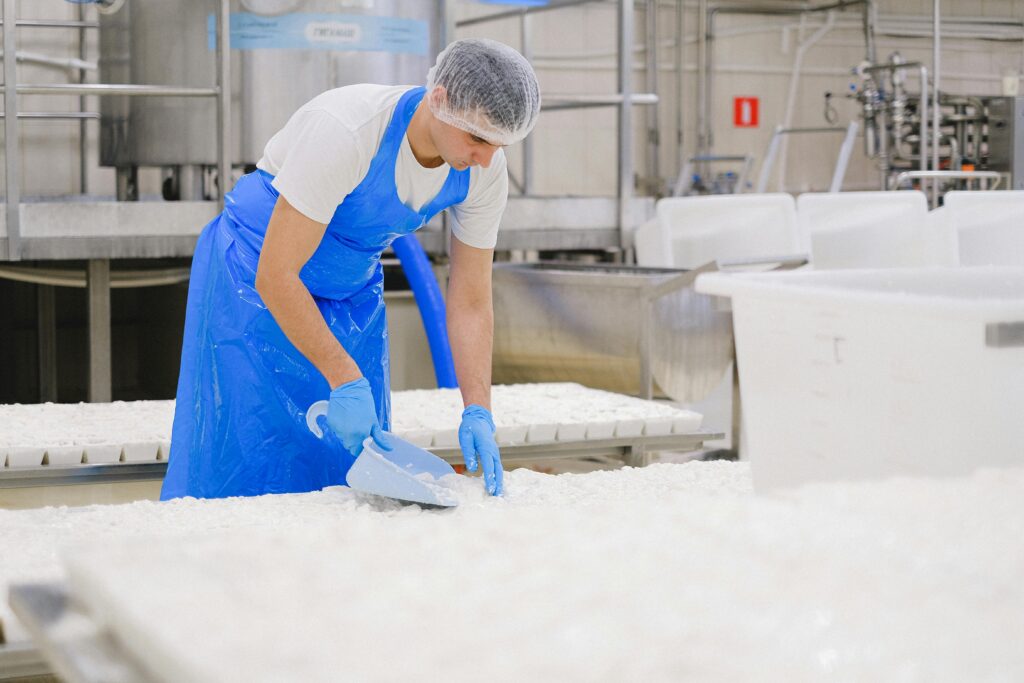
Factory shutdown waste is a specific category of food loss that takes place when manufacturing facilities pause operations for scheduled breaks, especially during the festive season. These closures are routine across the food sector and are usually planned for late December when factories close for Christmas and the New Year. The pause often looks simple from the outside, although the internal mechanics of food production make it far more complex. Food continues to react to time, temperature and moisture even when people are not on site, which means production cannot be frozen in place.
How shutdowns create waste inside facilities
A shutdown requires a complete clearing of production lines. Think of partially processed food, such as dough that is still proofing or sauces that are cooling – these items cannot remain on the line for days or weeks. They are not finished products, and they cannot be stabilised for long-term storage. This means that these items are discarded and counted as food waste. The same applies to perishable raw ingredients that do not have a long enough shelf life to survive the closure period. Stock such as cream, eggs, milk or fresh produce may be used quickly, if possible, but in many facilities, the remaining quantities are written off at the end of the production schedule. Deep cleaning also forms part of the shutdown. Lines must be flushed, washed and disinfected to prevent microbial growth while the site stands still. The water and organic matter created during this process add to the overall waste footprint.
These operational demands collide with one of the most intense consumption periods of the year. December is a peak retail month, and factories operate at full capacity to meet holiday demand. However, the moment the shutdown deadline takes effect, any leftover ingredients or prepared components must be removed. A bakery may have hundreds of kilograms of filling or dough that cannot be held until January.
How shutdowns influence retail waste
Retailers also experience the consequences of these closures. A shutdown limits the ability to restock perishable goods during the festive period, which forces supermarkets to place larger orders ahead of time. Their planning needs to account for days when no deliveries will arrive. If consumer behaviour differs even slightly from what was forecast, surplus stock remains on shelves with expiry dates rapidly approaching. The result is a spike in waste across categories like meat, dairy, dips and desserts once Christmas has passed.
The shutdown period also affects product shelf life. Food produced just before the closure may spend several days in storage before distribution resumes. By the time it reaches consumers, it may have fewer usable days left. Shorter shelf life at home increases the likelihood of household waste as families deal with leftover festive meals and limited fridge space.
Moving towards more accountable waste practices
Understanding these patterns is important for improving sustainable production practices. Composting systems such as the BiobiN can support factories and retailers by ensuring that unavoidable organic waste is processed responsibly on-site rather than being sent to landfills. The festive season will always place pressure on supply chains, yet waste does not need to be the default outcome when operational pauses take place. Continuous recovery of organic material provides a more accountable approach to year-end production cycles.
Image: Anna Shvets